BMI Calculator for Men – Accurate, Simple and Health-Focused Guide
BMI Calculator for Men
Enter your height and weight to calculate your Body Mass Index (BMI).
This calculator is for informational purposes only and does not provide medical advice.
This BMI calculator for men shows where your weight stands today. It uses your height and weight to calculate Body Mass Index. BMI places you into underweight, normal, overweight, or obesity ranges. The math stays simple. You divide weight by height squared. The meaning behind the number matters more than the formula. The World Health Organization and the Centers for Disease Control and Prevention use BMI to assess adult weight status. Doctors rely on it as a first screening tool. It does not diagnose disease. It highlights potential risk. I have seen men ignore gradual weight gain for years. A simple BMI check often starts an honest conversation.
BMI matters for men because we store fat differently. Men tend to carry more fat around the abdomen. This visceral fat surrounds vital organs. The CDC links excess abdominal fat to heart disease and type 2 diabetes. The American Heart Association connects central obesity with higher cardiovascular risk. Many men focus on strength and muscle size. Few track fat gain until symptoms appear. BMI provides an early warning sign. You should treat BMI as a starting point, not a verdict. The National Institutes of Health recognizes BMI as a useful screening measure for adults.
The WHO defines clear BMI categories used worldwide. These standards guide public health policy across countries. When you use this calculator, you follow the same framework trusted by global health authorities. Muscle mass, age, activity level, and waist size also shape your health. A muscular athlete may show a higher BMI without high body fat. An older man may show a normal BMI while carrying excess visceral fat. Context always counts. I encourage men to see BMI as a reality check. It removes guesswork. It gives you a measurable baseline. From there, you make informed decisions and stay proactive about your health.
What Is a Healthy BMI for Men?
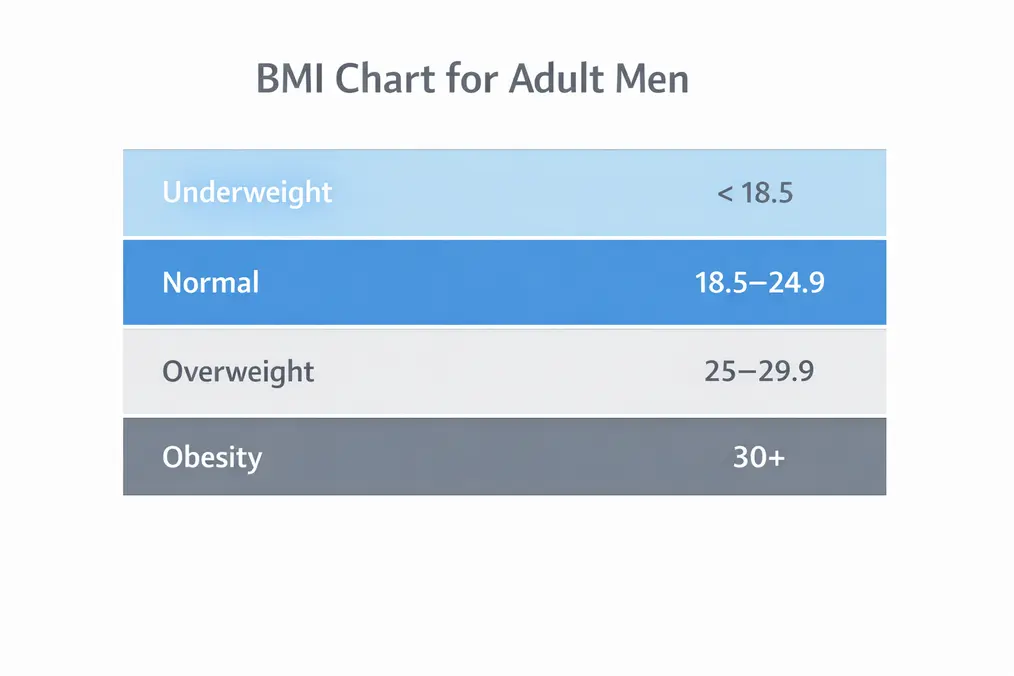
A healthy BMI for adult men falls between 18.5 and 24.9. The World Health Organization classifies this range as normal weight. A BMI between 25 and 29.9 indicates overweight. A BMI of 30 or higher indicates obesity. These categories apply to adult men of all ages. BMI provides a quick picture of weight status. It does not measure body fat directly. The WHO and CDC use identical adult BMI ranges. When BMI rises above 25, health risk begins to increase. Risk rises more sharply above 30. That shift may look small on paper, but it marks a meaningful change in category.
Healthy BMI Range for Men
The healthy BMI range for men is 18.5 to 24.9. Men in this range often show lower rates of high blood pressure, insulin resistance, and abnormal cholesterol. The CDC associates this range with reduced chronic disease risk in most adults. Fitness level still matters. A lean, active man at 24.5 often looks very different from a sedentary man at the same BMI.
Overweight BMI for Men
A BMI between 25 and 29.9 falls into the overweight category. The CDC links this range to increased risk of cardiovascular disease and metabolic syndrome. Weight gain in men often centers around the waist. Abdominal fat increases inflammation and strains the heart. Many men feel strong in this stage. Energy may remain normal. Risk still rises quietly.
Obese BMI for Men
A BMI of 30 or higher falls into the obesity category under WHO classification. Obesity raises the risk of heart disease, stroke, type 2 diabetes, sleep apnea, and joint problems. The NIH recognizes obesity as a major health risk factor in adult men. At this level, chronic disease becomes more likely.
BMI Category Table for Adult Men
BMI below 18.5 – Underweight
BMI 18.5 to 24.9 – Normal weight
BMI 25 to 29.9 – Overweight
BMI 30 and above – Obesity
These ranges apply to adult men regardless of height. Muscle mass and age still influence interpretation. The categories remain consistent under WHO and CDC guidelines.
BMI Calculator for Men (Height and Weight)
This calculator uses your height and weight to produce a clear BMI number. You can enter values in metric or imperial units. The science remains the same in both systems. In the metric system, enter weight in kilograms and height in meters. In the imperial system, enter weight in pounds and height in inches. The calculation follows established WHO and CDC standards. After calculation, compare your result with adult BMI categories. A result between 18.5 and 24.9 falls within the normal range. A result between 25 and 29.9 indicates overweight. A result of 30 or above indicates obesity. The number guides awareness. It does not confirm disease.
BMI Formula (Explained Simply)
BMI equals weight divided by height squared.
Metric formula:
BMI = weight in kilograms ÷ (height in meters × height in meters).
Imperial formula:
BMI = 703 × weight in pounds ÷ (height in inches × height in inches).
The number 703 adjusts pounds and inches to match the metric standard. The squared height balances natural differences in stature. Taller men weigh more. The formula accounts for that difference. Health organizations use this method because it stays simple and consistent.
Example Calculation for an Adult Male

A man weighs 80 kilograms. His height measures 1.75 meters.
First, square the height.
1.75 × 1.75 = 3.06.
Next, divide weight by squared height.
80 ÷ 3.06 = 26.1.
His BMI equals 26.1.
A BMI of 26.1 falls into the overweight category. According to WHO and CDC classifications, this range starts at 25. This result suggests increased health risk compared to the normal range. If this man carries high muscle mass, body fat percentage may remain moderate. If he carries abdominal fat, risk increases. The number starts the discussion.
Is BMI Accurate for Men?
BMI works well for many adult men. It performs best in men with average muscle mass and activity levels. It becomes less precise in muscular or highly athletic men. Men naturally carry more lean body mass due to testosterone. Lean body mass includes muscle and bone. Muscle weighs more than fat by volume. BMI cannot separate muscle from fat. A muscular man may fall into the overweight range despite low body fat. I have seen athletes with visible abs show a BMI of 27. On paper, that signals overweight. In reality, their body fat remained healthy. Body fat percentage provides deeper insight. Healthy body fat for men often ranges between 10 and 20 percent, depending on age.
A man with a BMI of 26 and 14 percent body fat carries different risk than a man with the same BMI and 28 percent body fat. Waist-to-height ratio adds another layer. Divide waist circumference by height. Many experts suggest keeping waist below half your height. Abdominal fat strongly links to metabolic disease. BMI alone cannot measure fat distribution. The CDC describes BMI as a screening tool. I view it as a doorway, not a final answer. When BMI falls outside the normal range, check waist size and body fat for clarity.
BMI Categories for Adult Men
Health authorities divide BMI into four main categories. The WHO and CDC use the same adult ranges worldwide.
Underweight (BMI < 18.5)
A BMI below 18.5 indicates underweight. Low body weight may reflect poor nutrition or underlying health issues. The NIH links underweight status with higher mortality in certain groups. Low testosterone can appear in underweight men. Testosterone supports muscle, bone, and energy. Weak immunity and nutritional deficiencies may also develop when intake stays too low.
Normal BMI (18.5–24.9)
A BMI between 18.5 and 24.9 falls within the normal range. This range associates with lower rates of heart disease and type 2 diabetes compared to higher categories. It supports a healthier metabolic profile. Good habits still matter.
Overweight (25–29.9)
A BMI between 25 and 29.9 indicates overweight. The CDC links this range to increased risk of metabolic syndrome and cardiovascular disease. Abdominal fat often increases during this stage. Mortality risk begins to rise, especially with inactivity and smoking.
Obesity (30+)
A BMI of 30 or higher indicates obesity. The WHO classifies obesity as a major global health concern. The CDC links obesity with heart disease, stroke, type 2 diabetes, sleep apnea, and certain cancers. Risk rises sharply as BMI increases.
BMI Calculator for Men by Age
BMI categories stay the same for adult men. Age changes interpretation.
Men Over 40
After 40, muscle mass often declines. Testosterone levels gradually decrease. Metabolism slows. Fat gain becomes easier, especially around the waist. A BMI of 27 at 45 may reflect higher health risk than the same BMI at 25. Combine BMI with waist measurement for better insight.
Men Over 50
After 50, visceral fat often increases. The NIH links visceral fat with insulin resistance and cardiovascular disease. Bone density also becomes a concern. Underweight status may increase fracture risk. Focus on strength training and adequate protein to support muscle and bone.
Young Adult Males
Young men often carry more muscle. Athletic men may show higher BMI without excess fat. Still, unhealthy habits in early adulthood raise long-term risk. Track trends, not just single numbers.
BMI vs Other Health Metrics
BMI vs Body Fat for Men
BMI measures weight relative to height. Body fat percentage measures fat mass directly. BMI works well for quick screening. Body fat offers detailed composition insight. Use BMI first. Use body fat when you need precision.
BMI vs BMR for Men
BMI classifies weight status. BMR estimates calories burned at rest. BMI reflects health risk. BMR guides calorie planning. Both matter. Men with more muscle often show higher BMR due to greater lean mass.
BMI vs Waist-to-Height Ratio
Waist-to-height ratio measures abdominal fat. Keep waist less than half your height. This ratio highlights visceral fat risk better than BMI alone. Combine both for a clearer health picture.
Limitations of BMI for Men
BMI does not adjust for ethnic differences. The WHO notes that many Asian populations face metabolic risk at lower BMI levels. Some health authorities use lower cutoffs for overweight in Asian adults. BMI cannot distinguish muscle from fat. Athletic men may show falsely high readings. It also does not measure fat distribution. Visceral fat carries greater risk than fat stored elsewhere. Frame size and bone density also influence weight but remain unmeasured by BMI. Despite these limits, BMI offers a consistent reference point. Use it wisely and alongside other measures.
How to Lower BMI for Men (Healthy Approach)

Lowering BMI requires steady lifestyle changes. Strength training helps preserve muscle while reducing fat. Train two to four times weekly. Focus on compound movements. Muscle supports metabolic health. Manage calorie intake with awareness. Reduce sugary drinks and processed snacks. Build meals around vegetables, lean protein, and whole foods. Increase protein intake to protect lean mass. Spread protein across meals. Good sources include eggs, fish, beans, and yogurt. Prioritize sleep. Aim for seven to nine hours nightly. Poor sleep disrupts hunger hormones and increases cravings. Manage stress through movement, time outdoors, or breathing exercises. Chronic stress encourages abdominal fat storage. Gradual change works best. Consistency builds lasting results.
FAQ About BMI Calculator for Men
Medical Guidelines and References
The World Health Organization defines adult BMI categories used worldwide. The Centers for Disease Control and Prevention applies the same ranges in the United States. The National Institutes of Health supports BMI as a practical screening tool for weight-related health risk.
These organizations agree that BMI identifies potential risk, especially when combined with waist measurement, blood pressure, blood sugar, and cholesterol levels. This tool provides educational information based on established public health guidelines. It does not replace professional medical advice. Consult a qualified healthcare professional for personalized evaluation if you have health concerns.